
- All
- Product Name
- Product Keyword
- Product Model
- Product Summary
- Product Description
- Multi Field Search
Views: 0 Author: Site Editor Publish Time: 2026-08-17 Origin: Site


A glass smoke barrier is a transparent or semi-transparent partition system engineered to prevent smoke from migrating between zones during a fire. These systems buy critical evacuation time, protect structural integrity, and meet international fire safety codes—making them a standard requirement in commercial, institutional, and high-rise construction.
Smoke kills more people in building fires than flames do. According to the National Fire Protection Association (NFPA), smoke inhalation accounts for the majority of fire-related fatalities in structure fires. Yet for decades, building design focused almost entirely on suppressing flames—treating smoke as a secondary concern.
That thinking has changed. Architects, engineers, and fire safety consultants now treat smoke containment as a primary design objective, and glass-based systems have become central to that strategy. They combine transparency, structural performance, and compliance into a single solution. For projects that demand both safety and aesthetics, the advantages are hard to ignore.
Heshan Hengbao Fire Resistant Glass Factory Co. Ltd has been manufacturing fire-resistant glass products for over 28 years. With 74 national CCCF certificates, 88 patents, and a 65,000+ square meter production facility in Guangdong, China, Hengbao supplies certified smoke and fire barrier solutions to commercial and industrial projects worldwide.
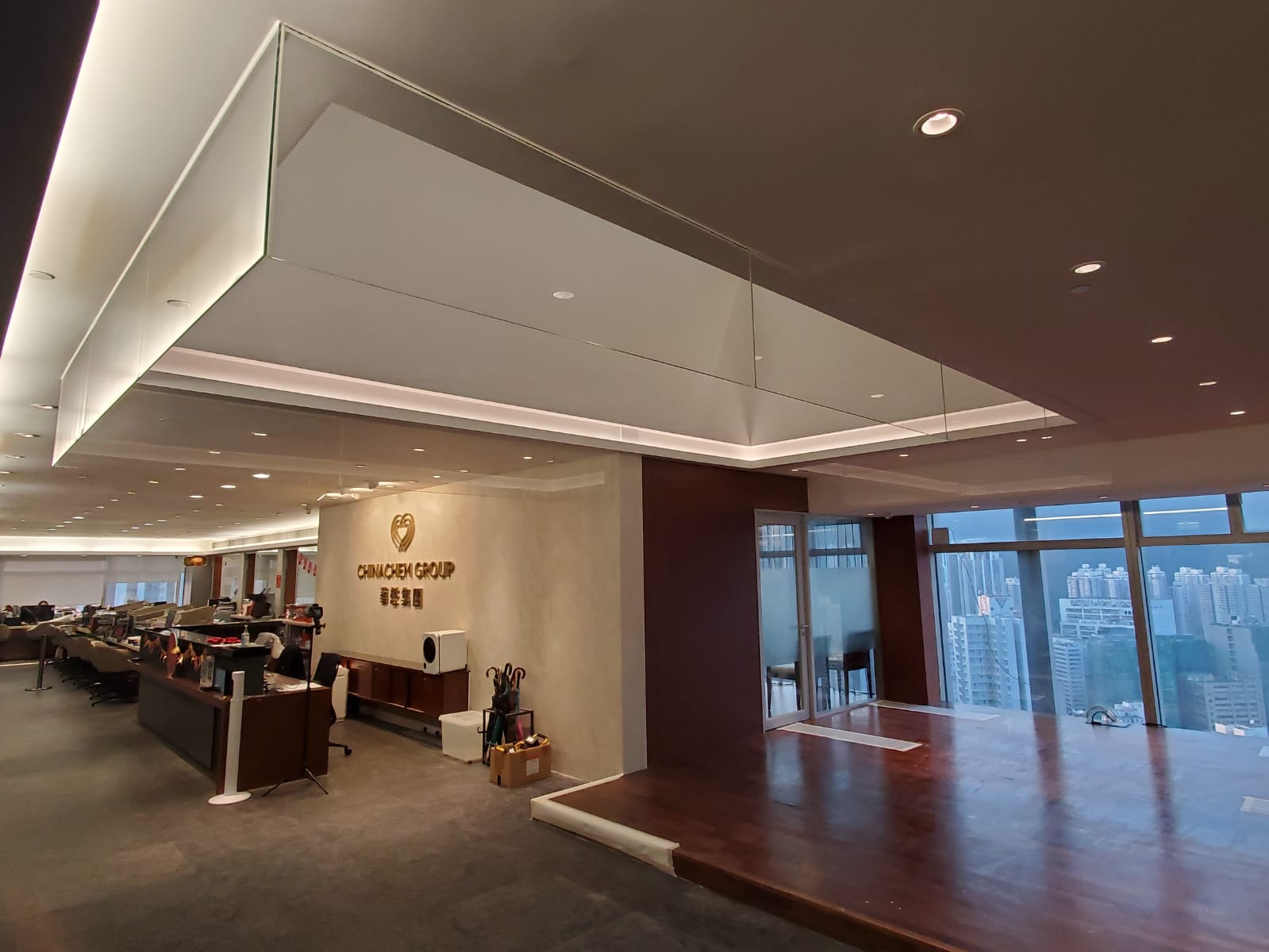
Glass smoke barriers work by creating sealed compartments within a building. When smoke begins to migrate—driven by heat, pressure differentials, and HVAC systems—a properly installed barrier stops it at the boundary. This compartmentalization limits the spread to the zone of origin, preserving clearer air in adjacent areas and giving occupants more time to evacuate safely.
These systems are not simply decorative partitions. They are engineered assemblies with tested sealing performance, including intumescent gaskets that expand under heat to close any gaps around frames. The glass itself is selected based on the required rating—how long it can maintain integrity under smoke pressure without cracking, warping, or failing.
Effective smoke isolation begins at the design phase. Barrier placement must account for airflow patterns, occupancy loads, exit routes, and local fire codes. When done correctly, a single barrier system can dramatically reduce the risk of mass casualty events in large-footprint buildings.
Smoke barrier performance is assessed across several criteria. These vary by jurisdiction and building type, but the core metrics are consistent across major standards such as NFPA 92, EN 12101, and GB 14907 (China's national fire-resistance standard).
The table below summarizes the key performance criteria used to evaluate smoke barrier systems:
Performance Criterion | Description | Typical Requirement |
|---|---|---|
Smoke leakage rate | Volume of smoke passing through barrier per unit time | ≤ 1.25 m³/min per meter of gap (NFPA 92) |
Integrity rating (E) | Resistance to flame and hot gas passage | 30, 60, or 90 minutes |
Radiation rating (W) | Limiting heat radiation transmitted through glass | Tested per EN 1634-1 |
Pressure differential | Barrier's ability to hold against air pressure | Tested at ±25 Pa minimum |
Seal performance | Gap sealing under thermal expansion | Intumescent or brush seal tested |
Glass thickness | Structural support under fire conditions | Typically 6mm–19mm depending on rating |
Meeting these standards is non-negotiable for code-compliant buildings. Hengbao's products are tested and certified under both Chinese national standards and internationally recognized frameworks, giving specifiers confidence in cross-border projects.
Glass smoke barriers appear across a wide range of building types. Their use is particularly concentrated in spaces where large numbers of people gather, exits may be limited, or evacuation could take several minutes.
Airports and transit hubs: Long concourses and atria create natural smoke channels. Barriers subdivide these spaces into manageable zones without blocking sightlines or disrupting passenger flow.
Hospitals and healthcare facilities: Smoke-sensitive patients cannot evacuate quickly. Barriers in corridors and ward entrances protect those with limited mobility.
Shopping malls and retail centers: Open floor plans present significant smoke migration risks. Overhead smoke control barrier systems—often installed at the ceiling level—contain smoke within individual retail zones.
High-rise office buildings: Stairwells and elevator shafts act as chimneys, pulling smoke upward at dangerous speeds. Lobby and floor-level barriers interrupt this vertical spread.
Educational institutions and auditoriums: These buildings combine high occupancy density with complex evacuation logistics. Barriers protect exit corridors and reduce overall smoke volume in occupied areas.
In each of these settings, glass provides a meaningful advantage over opaque materials: occupants can see through it, maintaining visual continuity of escape routes and reducing panic.
Hengbao's smoke barrier range is manufactured under strict quality controls at its Jiangmen, Guangdong facility. The company has held ISO 9001 and ISO 14001 certifications since 2014 and achieved national high-tech enterprise status in 2016—credentials that reflect its investment in both product development and environmental responsibility.
What separates Hengbao's offering from general glass suppliers is depth of specialization. Every product in the smoke barrier range is tested as a complete assembly: glass, frame, gasket, and hardware. This systems-level approach ensures that certified performance in the lab translates to reliable performance on-site.
Hengbao also supports full OEM and ODM customization. Project-specific requirements—dimensions, frame finishes, glass tint, and integration with automatic drop systems—are accommodated from the factory level. For international clients, Hengbao's professional sales team provides 24-hour support and can coordinate documentation for local compliance submissions.
For those evaluating products during the specification phase, Hengbao offers downloadable technical datasheets and test reports through its website, reducing the research burden on procurement teams.
The right system depends on your building's occupancy type, local fire code requirements, architectural constraints, and budget. A few decision points worth reviewing:
Fixed vs. automatic drop systems: Fixed barriers are always in position. Automatic drop barriers descend from the ceiling during a fire event, triggered by detection systems. Automatic systems allow more flexible use of space during normal operations.
Framed vs. frameless assemblies: Framed systems offer higher structural rigidity and are easier to certify. Frameless designs suit contemporary interiors but require more precise engineering.
Rating duration: Choose your integrity rating based on the evacuation time your building requires—not simply the minimum code requirement. Higher-rated assemblies extend the window for safe egress.
If your project involves complex glazing requirements across multiple fire safety categories—including rated doors, partitions, and floors—Hengbao's full product range covers each of these needs under one roof, simplifying procurement and ensuring consistent certification standards.
Smoke containment is no longer an optional upgrade. Building codes worldwide are tightening, and the cost of non-compliance extends well beyond regulatory fines—it includes liability exposure, insurance implications, and most importantly, human lives.
Glass smoke barriers deliver on all fronts: they contain smoke, satisfy code requirements, and preserve the transparency that modern architecture demands. For building owners and specifiers looking for a certified, customizable solution backed by decades of manufacturing experience, Hengbao offers a compelling starting point.
Contact the Hengbao team at firepros.hk to request product documentation, discuss project-specific requirements, or submit an inquiry for a certified smoke barrier system.
A smoke barrier is designed specifically to limit the movement of smoke between building zones. A fire barrier resists both flame and heat for a defined period. Some systems—rated for both fire integrity and smoke leakage—serve both functions simultaneously. For most high-occupancy buildings, both barrier types are required by code in different locations.
Rated durations vary by product and application. Common ratings are 30, 60, and 90 minutes. This refers to the time the assembly maintains its smoke-sealing integrity under standardized test conditions. Actual performance depends on correct installation and the quality of all system components, including seals and fixings.
Yes. Automatic drop-type smoke isolation barriers are designed to connect directly with smoke detectors or building management systems. When a detector triggers, the barrier descends automatically without manual intervention. This integration is standard in large commercial and institutional projects.
Hengbao holds 74 national CCCF certificates and has testing documentation aligned with major international standards including EN 12101 and ISO frameworks. The company exports to markets across Asia, the Middle East, and beyond, and can provide localized compliance documentation on request.
Hengbao supports full customization including panel dimensions, frame material and finish, glass type (clear, tinted, or laminated), sealing systems, and integration with automatic drop mechanisms. OEM and ODM services are available for projects with specific architectural or branding requirements.


