
- All
- Product Name
- Product Keyword
- Product Model
- Product Summary
- Product Description
- Multi Field Search
Views: 0 Author: Site Editor Publish Time: 2026-07-15 Origin: Site


TL;DR:
Safety glass is a broad category of glass engineered to resist breakage, minimize injury, and—in fire-critical applications—contain flames and smoke for defined periods. Key types include tempered glass, laminated glass, and fire rated glass. Hengbao, backed by 28+ years of manufacturing experience and 74 national CCCF certifications, produces certified safety glass solutions trusted by architects and developers worldwide.
Glass has shaped modern architecture more than almost any other material. Floor-to-ceiling facades, open-plan office partitions, glazed fire exits—none of it would be possible without advances in safety glass technology. But not all glass is created equal. The type you specify for a project determines how a building performs under stress, impact, and—critically—fire.
This guide breaks down how different safety glass types work, where each one belongs, and why getting the specification right matters far more than most people realize.


Standard annealed glass shatters into sharp, jagged shards. That single characteristic is the root cause of countless injuries and fire-related fatalities every year. Safety glass addresses this through one of two approaches: changing how the glass breaks, or preventing it from breaking at all.
Tempered glass is heat-treated to create internal compression. When it fails, it crumbles into small, relatively blunt fragments rather than dangerous shards. Laminated glass takes a different route—a plastic interlayer (typically PVB or SGP) bonds two or more panes together so that, even when cracked, the glass holds in place.
Both methods improve safety outcomes dramatically. Neither, however, is inherently fire-resistant. That distinction belongs to a separate and more specialized category.
Glass Type | Key Property | Typical Applications | Fire Resistance |
|---|---|---|---|
Tempered Glass | Breaks into small fragments | Doors, shower screens, facades | None |
Laminated Glass | Holds together when cracked | Skylights, floors, hurricane zones | Limited |
Fire Rated Glass | Resists fire and heat transfer | Fire exits, stairwells, partitions | 30–120+ minutes |
Borosilicate Glass | High thermal shock resistance | Lab settings, single-layer fire glazing | Moderate |
SGP Laminated Glass | Superior interlayer strength | Structural glazing, high-impact zones | None |
The table above illustrates a common misconception: safety and fire resistance are not the same property. A tempered glass panel is safer than annealed glass under impact, but it will fail quickly under fire exposure. Architects and specifiers need to understand this distinction before selecting glazing systems for any project.
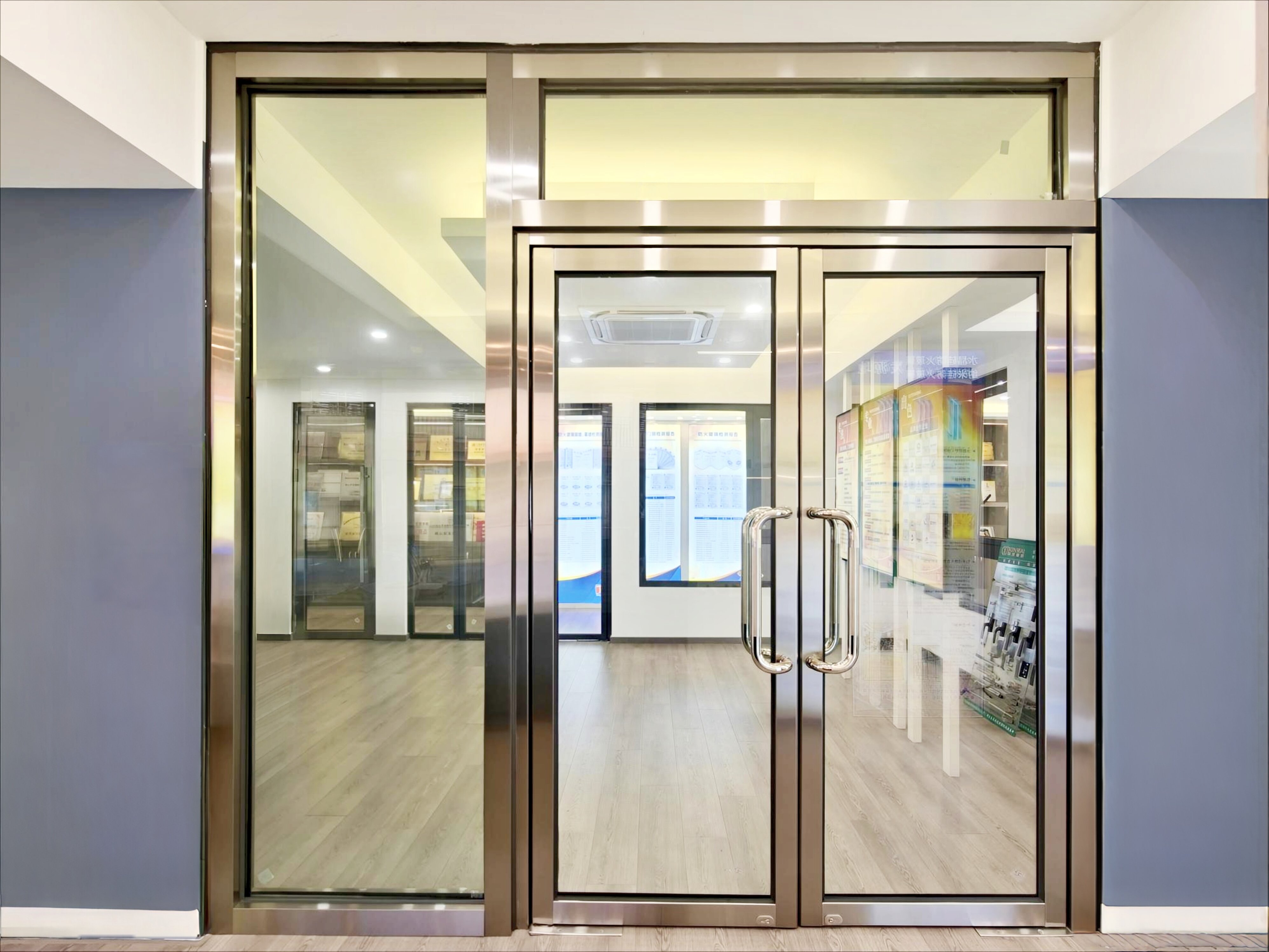

Fire rated glass is tested and certified to maintain integrity—and in many cases, insulation—for a defined period under standardized fire conditions. Ratings are typically expressed in minutes: 30, 60, 90, or 120. Some advanced systems achieve even longer durations.
There are two core performance categories:
Integrity (E): The glass prevents the passage of flames and hot gases but does not significantly reduce heat radiation.
Integrity and Insulation (EI): The glass prevents both flame passage and excessive heat transfer to the unexposed side.
The right category depends on the application. A fire corridor partition may only require an E rating, while a wall adjacent to an escape route often demands EI performance to protect evacuating occupants from radiant heat.
At Hengbao, every fire-rated glazing product—from single-layer panels to full curtain wall systems—is certified to relevant national and international standards. The company has accumulated over 270 test reports and holds 88 patents across its fire-resistant glass, door, and window product lines.
Among the lesser-discussed materials in fire safety specifications is borosilicate glass. Its defining characteristic is exceptional thermal shock resistance—the ability to withstand rapid, dramatic temperature changes without cracking. This makes it well-suited to single-layer fire-rated glazing applications where a thinner, lighter panel is preferred.
Borosilicate glass does not delaminate or discolor under heat, which matters in high-visibility architectural contexts. However, it provides integrity performance only—not insulation. For applications requiring EI ratings, multi-layer systems with intumescent interlayers remain the standard solution.
Understanding the limitations of each glass type is not a technical formality. It directly affects whether a glazing system passes certification and whether it performs correctly in an actual fire event.
Heshan Hengbao Fire Resistant Glass Factory Co., Ltd. has operated for over 28 years from its facility in Jiangmen, Guangdong Province—a 65,000+ square meter plant equipped with advanced production and inspection equipment. The company supplies fire-resistant glazing systems to commercial, institutional, and infrastructure projects across the globe.
Hengbao holds ISO 9001 and ISO 14001 management system certifications, alongside 74 national CCCF main product certificates. It was recognized as one of China's top-ten fire-proof glass enterprises and participated directly in revising national fire-proof glass standards—a distinction that reflects deep institutional knowledge of how these standards are written and why they exist.
The product range covers:
Single-layer and multi-layer fire-rated glass panels
Fire-rated windows and glazing doors
Fire-rated glazing partitions and curtain walls
Smoke barriers and fire-rated floor/skylight systems
Tempered and SGP laminated building glass
Custom fabrication is available across all product lines, with flexibility on size, color, thickness, and material composition.
Project type drives specification. A commercial high-rise with open-plan floors has fundamentally different glazing requirements than a hospital corridor or a school stairwell. The questions worth asking at the specification stage are:
What fire rating is required by code? Local building regulations often mandate minimum E or EI ratings for specific zones.
Does the application require impact resistance as well as fire resistance? If so, look for systems that combine both properties.
What are the aesthetic constraints? Fire-rated glass has improved dramatically in optical clarity, but some systems—particularly those with intumescent interlayers—may have a slight tint.
What is the structural load? Glazed floors and skylights require glass systems with certified structural capacity in addition to fire performance.
Getting these answers early, and working with a manufacturer that can provide certified systems across all categories, avoids costly substitutions during construction.
When glazing systems are under-specified, the consequences range from regulatory non-compliance to catastrophic failure during a fire. Building code violations discovered post-construction require expensive retrofits. More seriously, glazing that fails earlier than its rated period gives occupants less time to evacuate and firefighters less containment to work with.
Hengbao's 24-hour sales and technical support team works with architects, developers, and contractors to ensure the right system is selected from the outset—reducing the risk of specification errors before they become construction problems.
Safety glass is a broad category, but specificity matters. Tempered glass, laminated glass, fire rated glass, and borosilicate glass each serve distinct purposes—and mixing them up on a specification sheet has real consequences. The right product, properly certified, and correctly installed is what turns a code requirement into genuine life safety performance.
If you're sourcing glazing for a project that demands certified fire protection, Hengbao offers a verified product range, extensive test documentation, and direct technical support. Contact the Hengbao team at ritachan@hbglass.net or visit firepros.hk to request specifications and certifications for your project.
Safety glass is a broad term covering any glass designed to reduce injury on breakage—including tempered and laminated glass. Fire rated glass is a subcategory specifically engineered and certified to resist fire and smoke for a defined period, typically 30 to 120 minutes. Not all safety glass provides fire resistance.
Fire rated glass is certified to perform for specific durations—commonly 30, 60, 90, or 120 minutes—under standardized fire test conditions. The actual duration depends on the product type, installation method, and whether it is tested for integrity only (E) or integrity and insulation (EI).
Borosilicate glass provides integrity (E) performance due to its high thermal shock resistance, but it does not offer insulation (EI) performance. For applications where heat transfer must also be limited—such as escape route partitions—multi-layer fire-rated glass systems with intumescent interlayers are required.
Look for products certified under national or international fire test standards, such as China's CCCF certification or equivalent European/international standards. Hengbao holds 74 CCCF certificates and over 270 test reports, providing thorough documentation for compliance purposes.
Yes. Hengbao offers OEM and ODM services across its full product range, with customization available for dimensions, thickness, color, and material composition. This makes it practical to meet both code requirements and project-specific aesthetic or structural constraints.


